Booksmrt / Records and controls
From receipt to financial statement: build the audit trail
A clean audit trail is not a stack of attachments. It is an unbroken chain of identity, amount, date, purpose, approval, account, period, and final presentation.
Equipment repair
Service date: June 17, 2026
$864.00AP-2026-0617-014This ID follows the event.
The document stays intact.
To create an audit trail, assign the source document a stable ID, capture the business purpose and approval, post a balanced entry with that ID, reconcile the ledger account, and preserve the report version that includes the entry. A reviewer should be able to start from the financial statement and reach the original evidence—and start from the evidence and find its statement effect—without searching by memory.
Define the original business event
The worked event is an $864 repair completed on June 17. The vendor invoice identifies the equipment, service date, work performed, amount, and payment terms. The operations manager confirms the repair occurred and was business-related.
That evidence establishes more than payment. It supports the counterparty, amount, service period, purpose, and approval. A card charge alone would establish that the account was charged but not necessarily what work was performed.
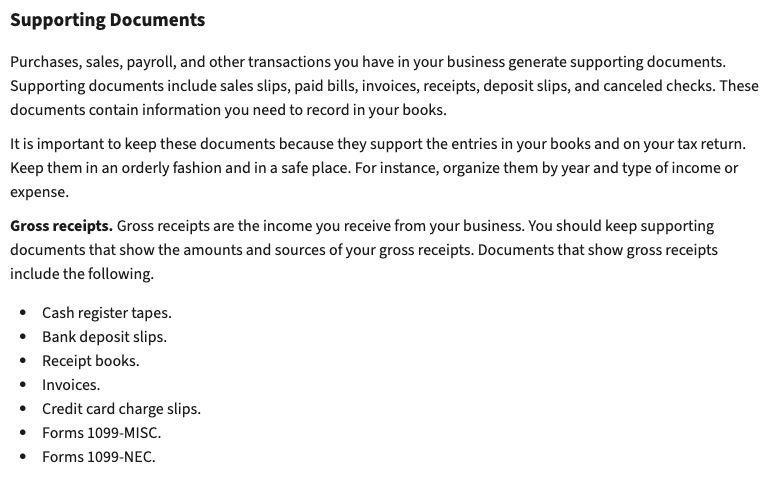
Source notes: Publication 583: Starting a Business and Keeping Records
Preserve identity through intake and approval
Assign AP-2026-0617-014 before the document enters accounting. Store the original file, not only a resized preview. Record its cryptographic checksum or other tamper-evident control when the system supports it.
The intake record captures received date, service date, vendor, amount, business purpose, approver, duplicate-search result, and proposed account. Exceptions remain visible instead of being resolved in chat and forgotten.
Source notes: What kind of records should I keep? · Protecting Personal Information: A Guide for Business
Post the event once
If the invoice is entered before payment, debit repairs and maintenance for $864 and credit accounts payable. When paid, debit accounts payable and credit cash. If the company records only the card payment and has no bill workflow, the single posting must still carry the source ID and the correct June service date under its accounting policy.
The failure mode is recording the bill as an expense and then coding the payment to expense again. The persistent ID and vendor-invoice number allow a duplicate check across both entry paths.
Source notes: How should I record my business transactions? · Publication 538: Accounting Periods and Methods
Check yourself: the bill and bank payment both hit Repairs. What happened?
The expense was recorded twice. Keep the invoice entry (Dr Repairs / Cr A/P). Match the payment to the payable (Dr A/P / Cr Cash). Repair the unsupported duplicate under the close policy, retaining the audit history.
| Trace point | What the reviewer sees | Key control | Reference |
|---|---|---|---|
| Original invoice | Vendor, repair, date, $864 | Authenticity and business purpose | AP-2026-0617-014 |
| Intake | Owner, approver, proposed account | Duplicate and cutoff check | Queue item 014 |
| Journal | Dr Repairs / Cr A/P $864 | Balanced, dated, sourced | JE-0620-33 |
| General ledger | Repairs account detail | Source ID retained | GL 6200 |
| Trial balance | Repairs account total | Ledger agrees to trial balance | June TB |
| Income statement | Operating-expense presentation | Statement maps to trial balance | June P&L |
| Payment / reconciliation | Cash clearing and statement line | No duplicate expense | Card rec 06-30 |
Trace through the reporting layers
The journal identifies the balanced entry. The general ledger groups it with other repair activity. The trial balance carries the account total. The income statement presents repairs within operating expenses. Tax workpapers may map the book account to a return line or separate adjustment.
Each layer aggregates more information and therefore loses detail. The cross-reference is what lets a reviewer reverse that aggregation. A financial statement without a reproducible drill-down is a presentation, not a reliable evidence system.
Source notes: Publication 583: Starting a Business and Keeping Records · Beginners' Guide to Financial Statements
Close the loop with payment and reconciliation
Trace the $864 payment to the card or bank statement and the account reconciliation. Confirm the payment cleared the same payable or source ID rather than creating a second expense. If a credit or refund arrives later, link it to the original purchase.
At close, retain the original invoice, approval, journal reference, ledger excerpt, payment evidence, and reconciliation reference. Redact sensitive account details from review copies while preserving the controlled original.
Source notes: Publication 583: Starting a Business and Keeping Records · Protecting Personal Information: A Guide for Business